Wet Scrubber Selection Guide: Packed Bed, Spray Tower or Venturi?
An industrial wet scrubber brings contaminated gas into contact with water or another scrubbing liquid. The correct design depends on what must be removed, how the pollutant reacts with the liquid, the particulate loading, gas temperature, airflow and the required outlet condition. A model should not be selected from airflow alone.
This guide compares common wet scrubber types and lists the technical information a buyer should provide before requesting a quotation from a wet scrubber manufacturer.
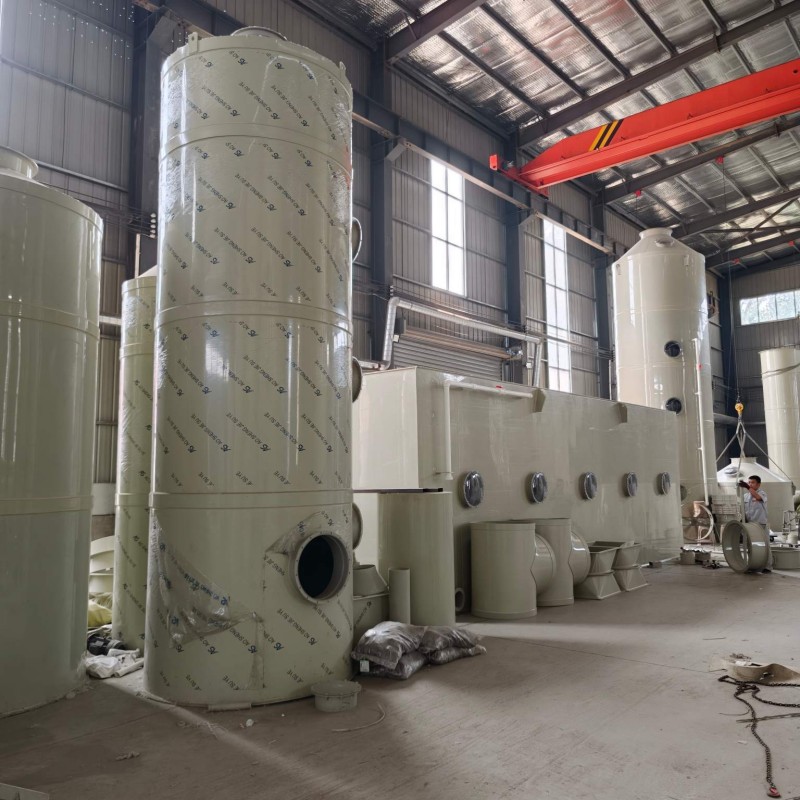
Wet Scrubber Selection Checklist
| Design input | Information to provide | Selection impact |
|---|---|---|
| Pollutant | Gas, vapor, acid mist, odor, dust or a mixture | Determines the contact and removal mechanism |
| Composition | Chemical names and inlet concentrations | Determines liquid chemistry and corrosion review |
| Airflow | Normal and maximum m3/h or CFM | Influences tower diameter, pressure loss and fan |
| Temperature | Normal and maximum inlet temperature | Influences quenching, evaporation and construction material |
| Particulate | Particle size, concentration, stickiness and solubility | Influences fouling risk and scrubber type |
| Liquid | Water or reagent, target pH and available utilities | Influences absorption, reaction and operating control |
| Outlet target | Required emission limit and test basis | Defines the required treatment stages |
| Site conditions | Layout, climate, voltage, materials and wastewater route | Influences equipment arrangement and operation |
How Does a Wet Scrubber Work?
Contaminated gas enters a vessel and contacts liquid droplets, wetted packing or another gas-liquid contact surface. Depending on the application, pollutants may be captured by impaction, dissolved into the liquid or reacted with a chemical reagent. The treated gas then passes through a mist eliminator before leaving the scrubber.
Good performance therefore requires more than a tower shell. The complete system can include spray nozzles, packing, recirculation tank, pump, piping, liquid controls, dosing equipment, mist eliminator, fan, ductwork, drain and blowdown treatment. The arrangement must match the pollutant and site conditions.
1. Packed Bed Wet Scrubber
A packed bed wet scrubber contains packing that increases the contact area between gas and liquid. It is commonly considered for soluble gases, acid gases, ammonia, selected odors and other applications where absorption or chemical reaction is the main removal mechanism.
Packing type, bed depth, gas velocity, liquid distribution and reagent chemistry must be reviewed together. High particulate loading, crystallization, solids or sticky material can foul the packing and increase pressure loss, so a pretreatment stage or another scrubber type may be required.
2. Spray Tower Scrubber
A spray tower scrubber uses nozzles to distribute liquid through an open chamber. Its relatively open gas path can be useful for gas cooling, quenching, selected soluble gases, coarse particulate and applications where packing would be vulnerable to fouling.
Nozzle arrangement, droplet size, liquid flow and residence time affect gas-liquid contact. A spray tower is not automatically the best choice for every fine particle or difficult gas. The required outlet level may call for multiple stages, different contact equipment or a downstream mist eliminator designed for the actual droplet loading.
3. Venturi Wet Scrubber
A Venturi wet scrubber accelerates gas through a restricted throat while introducing liquid. The high relative velocity between gas and droplets creates intensive contact, which is often considered for particulate control.
The intensive contact also creates pressure loss, so fan power and operating cost must be considered. Abrasive solids can affect throat and nozzle materials, while the resulting slurry requires a practical separation and disposal method. Final selection depends on particle size, loading and outlet requirements.
4. Acid Mist and Chemical Scrubbers
An acid mist scrubber is selected around the specific acid, concentration, temperature, droplet or vapor form and compatible construction materials. Sulfuric, hydrochloric and nitric acid applications should not be treated as identical because their chemistry and corrosion conditions differ.
The supplier needs safety data, process composition and the required emission limit. Reagent dosing, pH control, liquid concentration and blowdown management may be part of the system. Materials such as PP, FRP or selected metals must be evaluated against the real chemical and temperature conditions rather than chosen from a general corrosion chart alone.
Packed Bed vs Spray Tower vs Venturi
| Type | Typical selection direction | Main questions to review |
|---|---|---|
| Packed bed | Gas absorption, acid gas, ammonia and selected odor control | Solubility, reagent chemistry, packing fouling and liquid distribution |
| Spray tower | Quenching, cooling, open-contact gas washing and selected coarse or sticky contaminants | Nozzle design, residence time, liquid rate and fine-particle requirement |
| Venturi | Intensive gas-liquid contact for selected particulate applications | Pressure loss, fan power, abrasion, slurry and mist separation |
| Multi-stage system | Mixed pollutants requiring cooling, particulate removal and gas absorption | Stage order, combined pressure loss, controls and wastewater treatment |
Wet Scrubber or Dry Dust Collector?
A wet scrubber and a dry industrial dust collector solve different process problems. A baghouse or cartridge collector is often considered for dry particulate that can be captured and discharged as a solid. A wet scrubber may be considered when gas absorption, quenching, high moisture, sticky material or another liquid-contact function is required.
The decision should include waste handling. A dry collector produces collected solid dust, while a wet scrubber produces recirculating liquid and blowdown that may contain dissolved or suspended pollutants. Water supply, chemical consumption, corrosion, freezing and wastewater treatment can be decisive factors.
Critical Wet Scrubber Design Parameters
Pollutant chemistry and solubility
For gas absorption, the pollutant must transfer into the selected liquid or react with the reagent. Chemical names, concentration ranges and gas composition are therefore essential. Unknown mixed gases should be analyzed before final design.
Gas flow, temperature and humidity
Provide normal, minimum and maximum airflow as well as inlet temperature and moisture. These values influence vessel size, gas velocity, evaporation, saturation, fan duty and construction material.
Liquid-to-gas contact and recirculation
Liquid flow, spray distribution, packing wetting and recirculation arrangement affect contact. The design must also consider pump access, solids settling, strainer maintenance, makeup water and blowdown.
Mist elimination
Droplets carried out of the contact zone should be removed before the treated gas enters the stack or downstream equipment. Mist eliminator selection depends on droplet loading, fouling tendency, gas velocity and cleaning access.
Operating monitoring
Depending on the process, useful operating indicators may include pressure drop, liquid flow, pH, reagent feed, makeup and blowdown rates, pump condition and outlet temperature. The US EPA provides additional guidance on wet scrubber monitoring parameters.
Information Needed for a Wet Scrubber Quote
- Process and source of the exhaust gas
- Gas composition and each target pollutant
- Inlet concentration and required outlet limit
- Normal and maximum airflow
- Normal and maximum temperature and humidity
- Dust or mist particle information and loading
- Available water, reagent and wastewater treatment
- Preferred or prohibited construction materials
- Duct layout, installation space and stack arrangement
- Power supply, installation country and operating schedule
Wet Scrubber FAQ
Can a wet scrubber remove both gas and dust?
Some wet scrubber systems can treat a combination of gaseous and particulate pollutants, but the contact mechanism and stages must be designed for both. A system optimized for gas absorption may not provide the same particulate performance as a Venturi stage.
What determines wet scrubber price?
Price depends on airflow, scrubber type, vessel size, construction material, packing or throat design, pumps, mist eliminator, controls, reagent system, fan, ductwork and wastewater requirements. Pollutant data is required for a meaningful quotation.
Is water alone always sufficient?
No. Water can absorb some pollutants, while others require a compatible chemical reagent or a different treatment technology. The liquid chemistry should be selected from the actual gas composition and outlet target.
Request a Custom Wet Scrubber Proposal
Shuokang designs and manufactures packed bed scrubbers, spray towers, Venturi scrubbers and acid mist treatment equipment. Send the process data above through the contact form for a technical review and quotation. You can also review our protein hydrolysate odor treatment case for an application-based example.