Baghouse Dust Collector Selection Guide: Airflow, Filter Media and Cleaning
A baghouse dust collector uses fabric filter bags to separate particulate from an industrial air or gas stream. Although the principle is simple, reliable selection depends on airflow, dust loading, particle behavior, temperature, moisture, gas chemistry, filter area, cleaning method and dust discharge.
This guide explains the information a buyer should provide before requesting a baghouse quotation. It also shows why two systems with the same airflow can require different filter media, dimensions, fans and hopper arrangements.
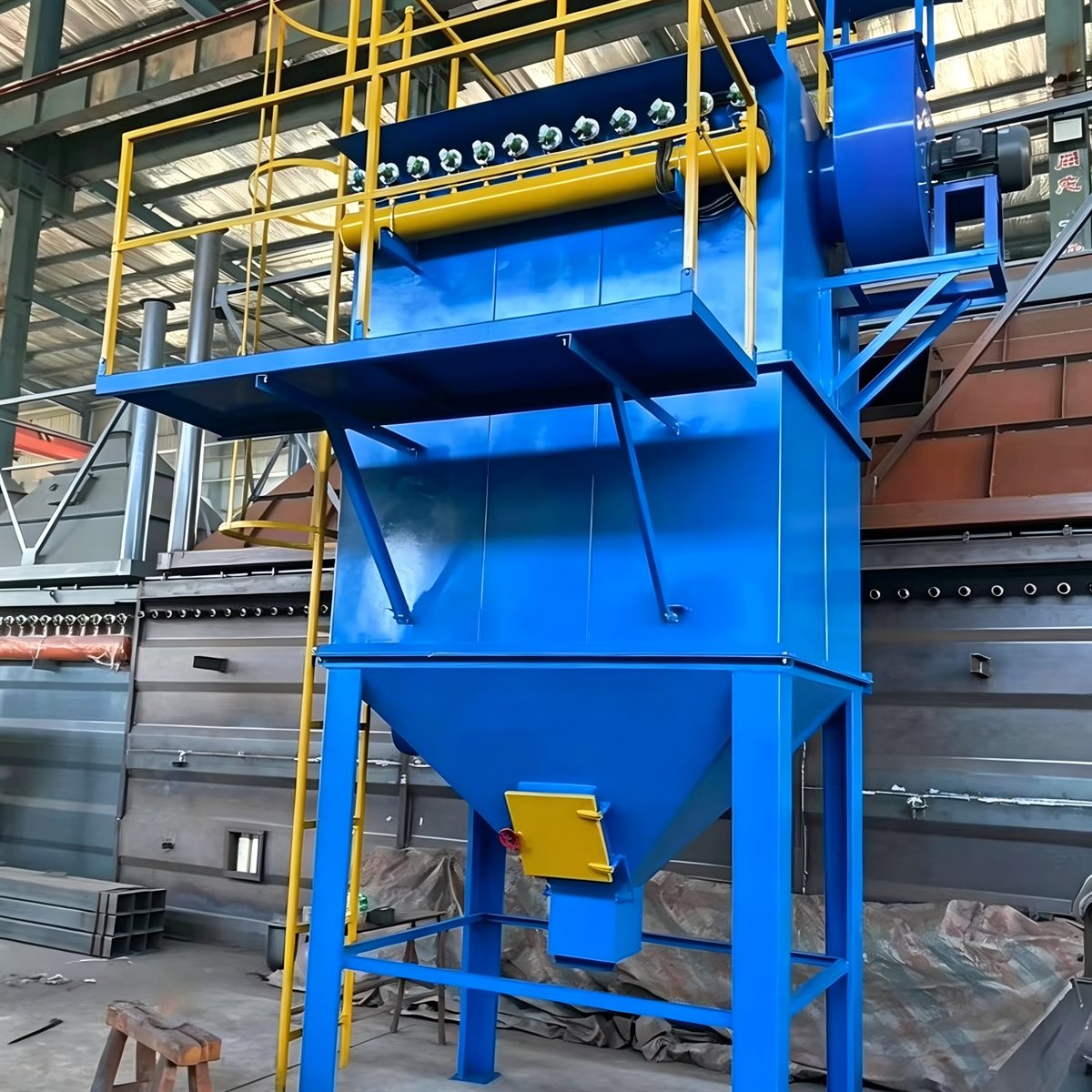
Baghouse Dust Collector Selection Checklist
| Design input | Information to provide | Why it matters |
|---|---|---|
| Process airflow | Normal, minimum and maximum m3/h or CFM | Influences housing, filter area, duct and fan selection |
| Dust loading | Inlet concentration and expected mass per hour | Influences cleaning frequency, hopper and discharge |
| Dust properties | Particle size, bulk density, abrasiveness, stickiness and combustibility | Influences inlet design, media and safety review |
| Gas conditions | Normal and peak temperature, humidity, dew point and chemical composition | Influences filter media, insulation and condensation control |
| Outlet target | Required emission limit and test basis | Influences media treatment and system arrangement |
| Duty cycle | Hours per day and continuous or intermittent production | Influences online cleaning and redundancy needs |
| Dust discharge | Bin, rotary valve, screw conveyor or process return | Influences hopper and airlock design |
| Site conditions | Duct layout, space, climate, utilities and installation country | Influences fan pressure, controls and construction |
How Does a Baghouse Dust Collector Work?
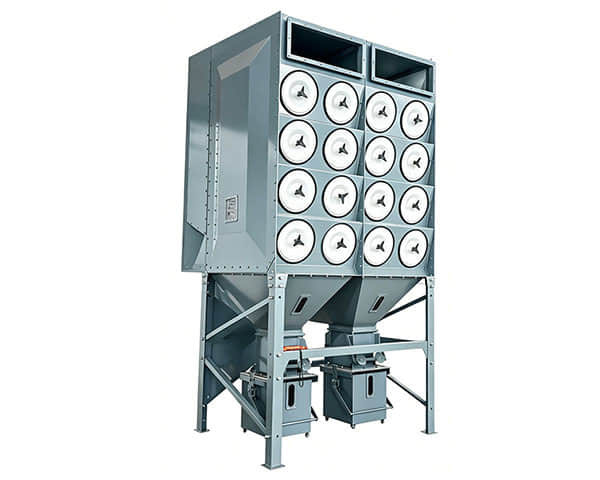
Dust-laden air enters the collector and is distributed through the dirty-air section. Air passes through the filter bags while particulate remains on the media surface and forms a dust layer. Cleaned air enters the clean-air chamber and leaves through the outlet.
The filter bags must be cleaned so pressure loss does not continue rising. In a pulse-jet baghouse, short compressed-air pulses remove accumulated dust from the bags. The released dust falls into the hopper and is discharged through a bin, valve or conveyor. Every stage must operate together; good filter bags cannot correct poor airflow distribution or a blocked hopper.
1. Determine the Required Airflow
Baghouse airflow should come from the source-capture and process ventilation calculation. It depends on hood design, pickup points, duct velocity, process openings and how many branches operate at the same time. Selecting the collector from motor power or an estimated workshop volume can result in poor capture or unnecessary energy use.
Provide normal, minimum and maximum airflow. Variable production may require fan control or branch balancing. If airflow has not been calculated, send hood dimensions, duct sizes, machine openings and a layout drawing for engineering review.
2. Evaluate Dust Loading and Particle Properties
Inlet dust loading affects how often filters must be cleaned and how much material the hopper and discharge equipment must handle. The supplier should know the expected concentration as well as the approximate mass collected per hour or shift.
Particle size, bulk density, abrasiveness, shape, moisture and stickiness also matter. Fine light dust can remain suspended, abrasive material can wear inlet surfaces, and sticky dust can blind filter media or bridge in the hopper. Fibrous material may require a different inlet or filter arrangement from free-flowing mineral powder.
3. Understand Air-to-Cloth Ratio
Air-to-cloth ratio compares the gas flow through the baghouse with the total available filter area. It is an important sizing indicator, but it is not a universal number that can be copied between industries.
The suitable ratio depends on dust type, loading, particle size, cleaning method, filter media, temperature and required pressure loss. An aggressive ratio can reduce housing size but may increase filter loading, cleaning demand and emissions risk. A conservative ratio uses more filter area and a larger collector. The design basis should be stated in the technical proposal.
4. Confirm Temperature, Humidity and Dew Point
Provide both normal and peak inlet temperature. Short process excursions can damage media even when average temperature appears acceptable. Gas composition, oxygen, acids, alkalis, moisture and hydrolysis conditions can further limit filter life.
Operating near or below the dew point can cause condensation. Moist dust may adhere to bags, block pores, corrode the housing and form deposits in the hopper. Insulation, heat tracing, startup procedures or gas conditioning may be required for some processes.
The US EPA notes that baghouse filter material depends on the application, including gas chemistry, operating temperature and dust loading. See the EPA baghouse and filter guidance.
5. Select Filter Bag Media
Dust filter bag selection should consider temperature, chemical resistance, moisture, abrasion, particle size, required outlet performance and cleaning method. Surface treatments or membranes may be considered for particular fine, sticky or chemically demanding dusts.
Do not select media from a maximum temperature value alone. Continuous temperature, peak temperature, oxygen, humidity, acid or alkaline exposure and mechanical flexing all affect suitability. The filter supplier should receive the complete gas and dust conditions.
6. Match Bags and Filter Cages
The filter cage supports the bag during filtration and pulse cleaning. Cage diameter, length, wire arrangement, surface finish and connection must match the bag and tubesheet.
Sharp welds, corrosion, poor alignment or an incorrect cage size can damage filter bags. The maintenance plan should allow bags and cages to be removed without excessive bending or contamination of the clean-air section.
7. Choose the Cleaning Method
| Cleaning method | General operating direction | Questions to review |
|---|---|---|
| Pulse jet | Compressed-air pulses clean bags, often while the collector remains online | Air quality, pressure, valve sequence and pulse controls |
| Reverse air | Low-pressure reverse airflow flexes the bags in a compartment | Compartment isolation, bag tension and cleaning cycle |
| Mechanical shaker | Mechanical motion removes the dust layer, typically during an offline cycle | Production interruption, bag attachment and shaker maintenance |
The correct method depends on bag style, dust release behavior, operating schedule and system size. Excessive cleaning can wear bags, while insufficient cleaning raises pressure loss. Differential-pressure-based control may be more useful than cleaning on a fixed timer alone for variable dust loading.
8. Calculate System Resistance and Select the Fan
The fan must deliver the required airflow at the total system static pressure. Resistance includes hoods, duct friction, fittings, any cyclone pre-separator, the baghouse and the stack.
Filter pressure loss changes as the dust layer builds and cleaning occurs. Fan selection should use the expected operating range rather than a clean-filter value only. The motor, damper or variable-frequency drive must match the fan curve and process control strategy.
9. Design the Inlet and Air Distribution
Uneven inlet velocity can direct abrasive dust at a small group of bags, cause re-entrainment from the hopper or leave areas with poor filtration. Baffles, expansion sections or pre-separation may be used to distribute flow and reduce particle velocity.
A cyclone can remove a portion of coarse, heavy material before the baghouse. Whether it is useful depends on particle size distribution, pressure loss, product recovery and the required final emission level. A cyclone is not a substitute for final fabric filtration when fine-particle control is required.
10. Size the Hopper and Dust Discharge
A hopper is intended to transfer collected dust to the discharge equipment, not to store unlimited material. Dust left in the hopper can be re-entrained, compact, absorb moisture or create excessive structural load.
Hopper angle, outlet size, heating, vibration and level indication may be considered for materials that bridge or stick. The rotary valve, screw conveyor, double flap valve or bin must handle the expected mass rate while limiting unwanted air leakage into the collector.
11. Review Combustible and Hazardous Dust
Some wood, food, metal, plastic and chemical dusts can create fire or explosion hazards. The process owner should provide test data and a dust hazard analysis when combustibility is possible. A standard baghouse should not be assumed suitable for a hazardous application.
Explosion venting, suppression, isolation, spark detection, grounding, construction strength and collector location depend on the dust and local regulations. These measures require qualified safety engineering and should be included before equipment fabrication.
Baghouse vs Cartridge Collector vs Cyclone
| Collector | Common selection direction | Main limitations to review |
|---|---|---|
| Baghouse | Large airflow, heavy dust loading, continuous processes and application-specific bag media | Footprint, condensation, bag access and hopper discharge |
| Cartridge collector | Fine dry dust or fume where compact pleated filter area is useful | Sticky, fibrous, abrasive or heavy loading may shorten service life |
| Cyclone | Coarse particle separation or pre-cleaning before a final filter | Fine-particle outlet requirements may need a downstream collector |
Baghouse Maintenance Questions Before Purchase
- How is differential pressure monitored and used for cleaning?
- Can individual bags and cages be accessed safely?
- What compressed-air quality and pressure are required?
- How are hopper level and discharge equipment monitored?
- Are clean-air and dirty-air sections easy to inspect?
- What is the plan for leak detection and damaged bag replacement?
- Are replacement bags, cages, pulse valves and diaphragms available?
- How will maintenance isolate stored energy and hazardous dust?
Information Needed for a Baghouse Quote
- Industry, process and dust source
- Normal, minimum and maximum airflow
- Inlet dust concentration and collected mass per hour
- Particle size, bulk density, abrasion, stickiness and combustibility
- Normal and peak temperature, humidity and dew point
- Gas chemical composition and corrosion conditions
- Required outlet emission limit and test basis
- Operating hours and allowable production shutdown
- Preferred dust discharge and process recovery method
- Duct sketch, installation space, climate and utilities
- Installation country, voltage, frequency and quantity
Baghouse Dust Collector FAQ
Can a baghouse be selected from airflow alone?
No. Airflow is needed for sizing, but dust loading, filter media, temperature, humidity, cleaning, pressure loss, discharge and hazard conditions also determine the design.
What causes high baghouse differential pressure?
Possible causes include excessive dust loading, ineffective cleaning, wet or blinded bags, compressed-air problems, an unsuitable air-to-cloth ratio, blocked discharge or airflow above the design condition. The cause should be diagnosed before increasing cleaning frequency.
What determines baghouse price?
Price depends on airflow, filter area, housing and insulation, bag material, cleaning system, fan, hopper, discharge equipment, controls, safety features, ductwork and installation requirements.
Request a Custom Baghouse Proposal
Shuokang manufactures pulse-jet baghouse dust collectors and supplies filter bags, cages, fans and dust discharge equipment. Send the design inputs above through the contact form for a technical review and quotation. For a comparison with other collector types, read our industrial dust collector selection guide.