Welding Fume Extractor Selection Guide: Portable or Central System?
A welding fume extractor is most effective when it is selected around the welding process and captures contaminants close to where they are generated. A portable unit may be practical for one changing workstation, while a ducted central system can be a better direction for multiple fixed stations. Neither option should be chosen from motor power or maximum free-air volume alone.
This guide explains the questions a workshop should answer before requesting a portable or central welding fume extraction quotation.
Welding Fume Extractor Selection Checklist
| Selection input | Information to provide | Why it matters |
|---|---|---|
| Welding process | MIG, MAG, TIG, stick, flux-cored, robotic or another process | Influences fume generation and capture arrangement |
| Materials | Base metal, filler, coatings, oil and surface contamination | Influences hazard review and filtration strategy |
| Workstations | Number of welders and simultaneous operating points | Helps compare portable and central systems |
| Work layout | Fixed or moving work, part size, reach and available floor space | Determines hood, arm, table or gun capture method |
| Duty cycle | Welding hours per shift and production schedule | Influences filter loading and cleaning requirements |
| Air discharge | Recirculation or outdoor exhaust and applicable local rules | Influences filter stages and duct arrangement |
| Utilities | Voltage, frequency, compressed air and duct availability | Influences equipment configuration |
| Maintenance | Filter access, cleaning method and replacement plan | Influences long-term operating performance |
Why Source Capture Comes First
Welding fume rises and can pass through a welder's breathing zone before general room ventilation removes it. Local exhaust ventilation is intended to capture the plume at or near the source. The extraction hood or arm must be close enough to collect the fume without interfering with the weld or shielding gas.
OSHA recommends reducing exposure to welding emissions to the lowest feasible concentration through engineering controls and work practices, including local exhaust ventilation. See OSHA's welding fume control guidance. Final controls must reflect the process, exposure assessment and requirements in the installation country.
Portable Welding Fume Extractor
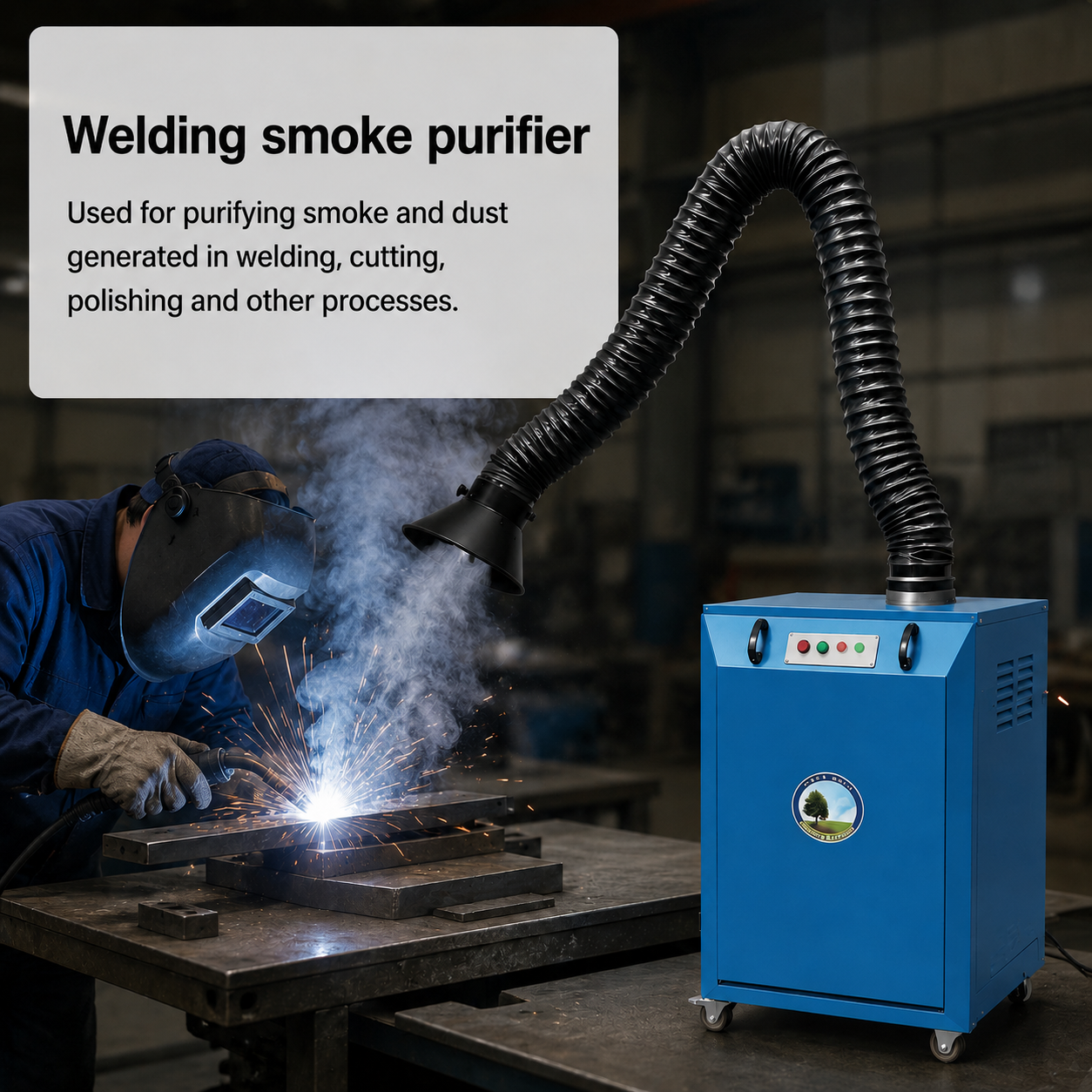
A portable welding fume extractor is a self-contained unit that can be moved between work areas. A flexible extraction arm is positioned near the welding plume, and the integrated fan draws contaminated air through the filter system.
This configuration is often considered when there are a small number of active welding points, workstations change, duct installation is impractical or welding is intermittent. Mobility is useful only when the operator can position the hood correctly and keep it near the moving weld.
Portable system advantages
- Can be moved between changing workstations
- Does not require a large central duct network
- Places source capture and filtration in one unit
- Suitable for phased workshop expansion or temporary work areas
Portable system limitations
- Each active station needs adequate extraction capacity
- The arm must be repositioned as the weld moves
- Individual filters require inspection and service
- Floor space, cable routing and movement paths must be considered
Central Welding Fume Extraction System
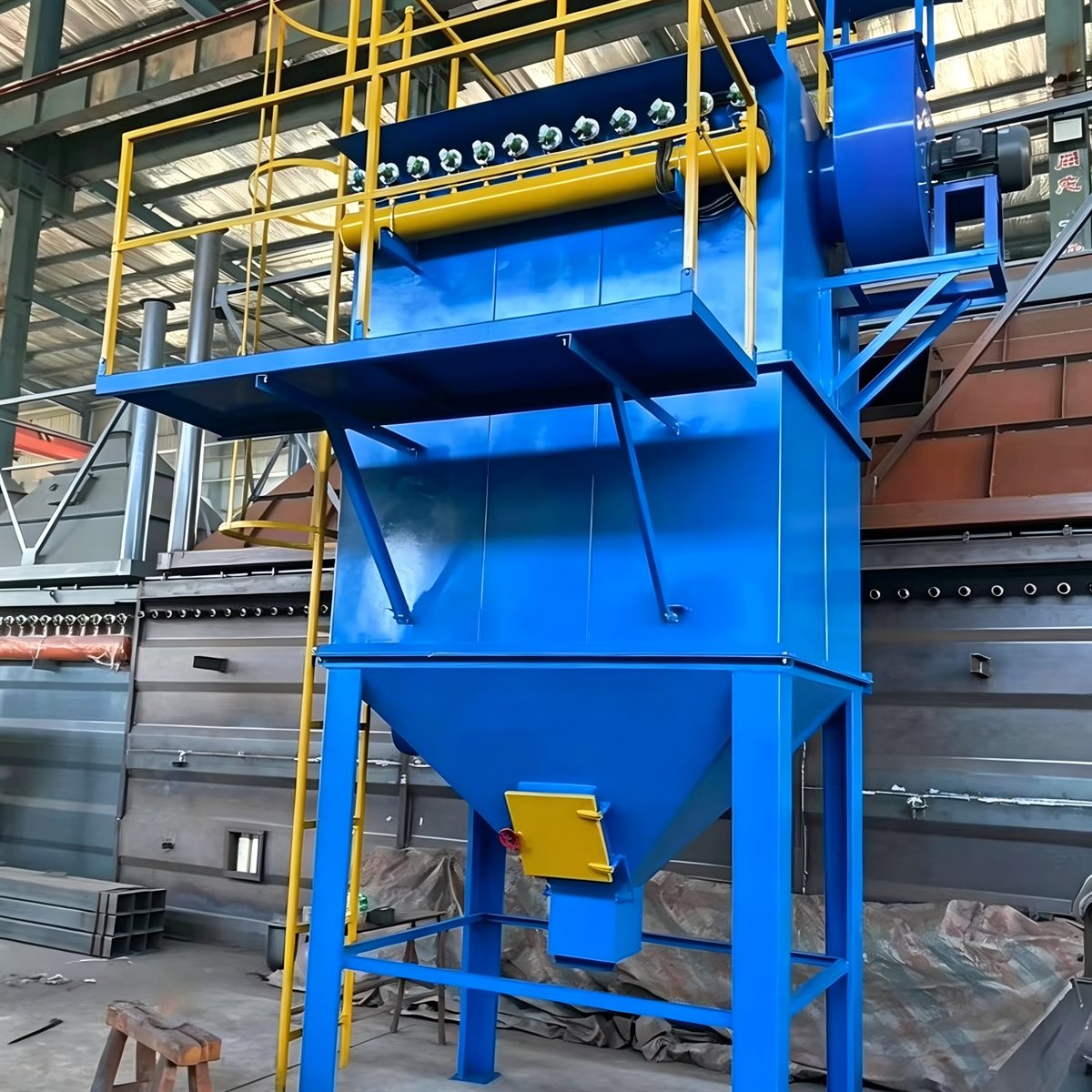
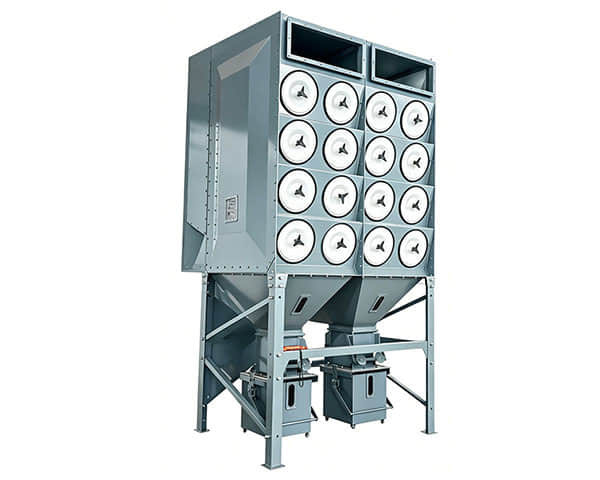
A central system connects multiple capture points to a common duct network and filtration unit. It is often considered for fixed production lines, repeatable welding positions, multiple simultaneous stations or robotic cells where duct routing and system controls can be planned.
Central systems require a complete airflow and static-pressure calculation. The design must account for which stations operate at the same time, duct lengths and branches, balancing, filter resistance and fan control. A large fan does not correct poor hood placement or an unbalanced duct network.
Central system advantages
- Can serve multiple fixed welding locations
- Centralizes filter cleaning and collected dust handling
- Can be integrated into production layouts and automated controls
- Reduces the number of mobile units on the workshop floor
Central system limitations
- Requires duct design, installation space and commissioning
- Changes to workstation layout can require duct modifications
- Incorrect balancing can reduce capture at distant branches
- Maintenance or shutdown planning affects several stations
Portable vs Central Welding Fume Extraction
| Question | Portable extractor direction | Central system direction |
|---|---|---|
| Station count | Few active welding points | Multiple simultaneous fixed stations |
| Layout | Work area changes frequently | Stable, planned production layout |
| Installation | Limited ductwork | Engineered duct network available |
| Maintenance | Service each individual unit | Centralized filter and dust handling |
| Expansion | Add units as stations are added | Confirm fan and duct capacity before adding branches |
| Best decision basis | Welding process, simultaneous stations, source capture, operating airflow, duty cycle and local requirements | |
Other Welding Fume Capture Options
Extraction arm or movable hood
A movable arm provides flexible local capture for manual welding. It must hold its position and remain close to the plume throughout the weld. Arm diameter, length, joints and hood design contribute to pressure loss and usable airflow.
Fume extraction welding gun
An extraction gun captures fume very close to the arc and can follow a moving weld. Its suitability depends on welding process, operator ergonomics, hose arrangement and the high-vacuum system used with the gun.
Downdraft or backdraft table
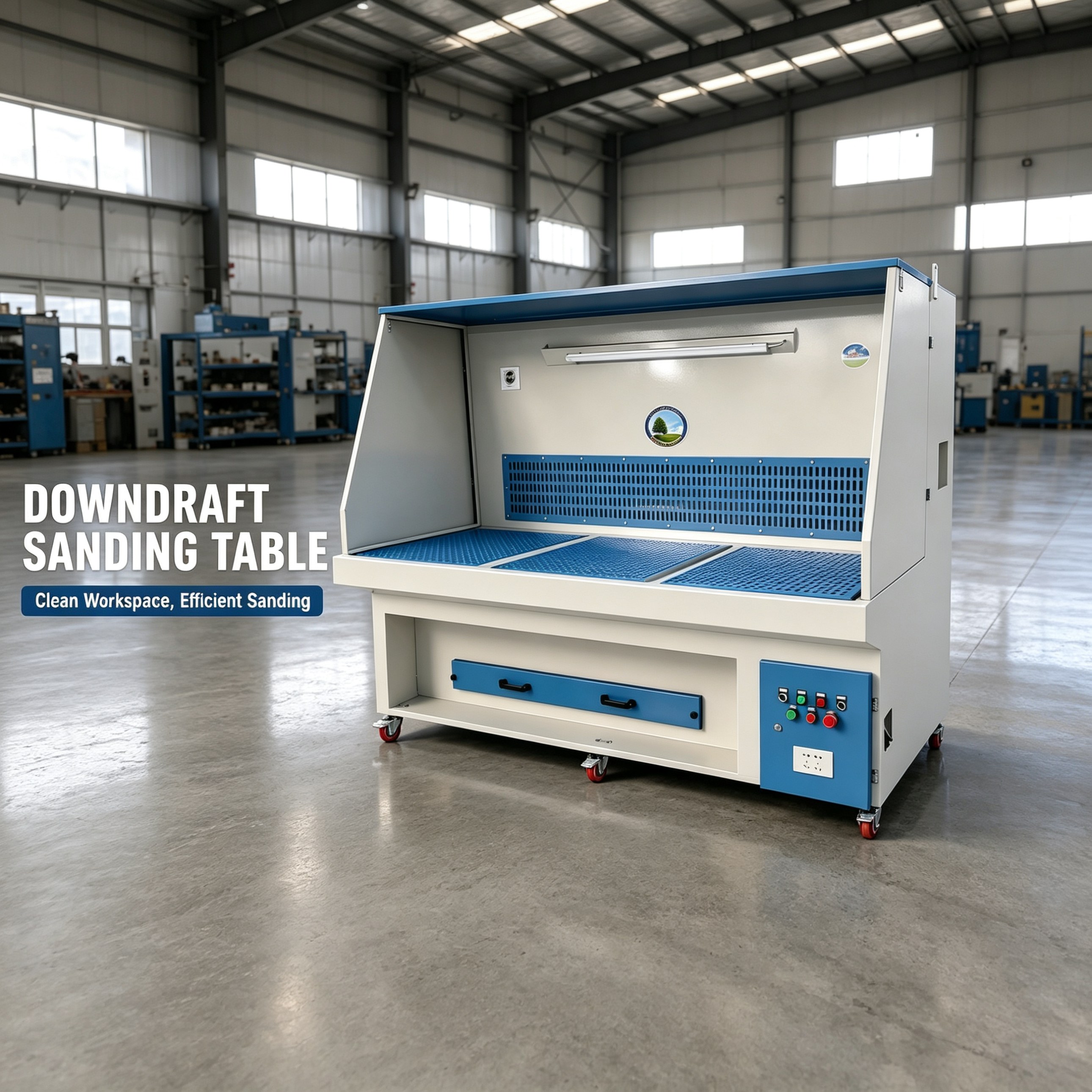
An industrial downdraft table can provide a defined work surface for smaller parts and processes where contaminants can be drawn away through the table or rear panel. Workpiece size and thermal or spark conditions must be reviewed.
Robotic welding enclosure
Robotic cells may use an enclosure or canopy arrangement connected to a central collector. The design should consider cell openings, robot movement, production cycle and how make-up air enters the enclosure.
Operating Airflow and Static Pressure
Published maximum airflow is not the same as airflow available at the hood during operation. The fan must overcome resistance from the extraction arm, duct, spark control components and filters as they load. Ask for operating airflow at the intended system resistance rather than comparing only free-air values.
The required capture airflow depends on hood geometry, distance from the source, cross-drafts and plume movement. More airflow is not always the only answer: a well-positioned hood can perform better than a distant hood connected to a larger fan.
Filter and Air-Discharge Questions
Welding fume commonly contains fine particulate, but its composition depends on the base metal, filler, coatings and process. A filter system may use a pre-separation stage, main cartridge and optional downstream stages selected for the identified contaminants.
Particulate filtration does not automatically remove every gas or vapor generated by welding or surface coatings. If filtered air will be recirculated into the workshop, confirm that the filter arrangement and monitoring satisfy the exposure assessment and local regulations. Outdoor exhaust also requires review of make-up air, energy use and emission requirements.
Sparks, Fire and Hazard Review
Hot particles and sparks can enter an extraction system. The process review should include welding method, grinding near the station, oil or combustible material on parts, collected dust properties and fire-prevention requirements. A spark screen or pre-separator does not replace a complete hazard assessment.
Welding fume extraction is an engineering control, not a substitute for required respiratory protection, safe work procedures or exposure monitoring. Qualified safety specialists should determine the complete control plan.
Maintenance Questions Before Purchase
- How is filter loading indicated?
- Is the filter replaced, manually cleaned or pulse cleaned?
- Can filters be removed without spreading collected dust?
- How are sparks and coarse particles handled?
- Is the extraction arm easy to position and does it hold position?
- What routine checks are required for airflow and seals?
- Are replacement filters available for the expected service period?
Information Needed for a Welding Fume Extractor Quote
- Welding process and consumable
- Base metal, coatings and surface contamination
- Number of welding stations and simultaneous users
- Hours of welding per shift
- Workpiece size and whether the weld position moves
- Preferred capture method and required arm reach
- Indoor recirculation or outdoor exhaust requirement
- Installation space, voltage, frequency and compressed air
- Installation country and applicable exposure or emission rules
Welding Fume Extractor FAQ
Is a portable welding fume extractor suitable for two welders?
Only when the unit is designed for the number of simultaneous extraction points and can maintain the required operating airflow at both hoods. The fan curve, filter resistance and arm losses must be reviewed.
Can filtered welding air be returned to the workshop?
That depends on fume composition, filter selection, exposure assessment and local regulations. Particle filtration alone should not be assumed to control every gas or vapor.
What affects welding fume extractor price?
Price depends on operating airflow, fan pressure, number and length of arms, filter stages, cleaning system, spark control, controls, mobility, construction and required certifications or safety features.
Request a Welding Fume Extraction Proposal
Shuokang supplies portable welding fume extractors and custom industrial filtration systems for workshops and production lines. Send the process, materials, workstation count, operating hours, layout and power supply through the contact form for a technical review and quotation. For broader collector selection, read our industrial dust collector selection guide.