FRP Wet Scrubber for Protein Hydrolysate Odor Treatment
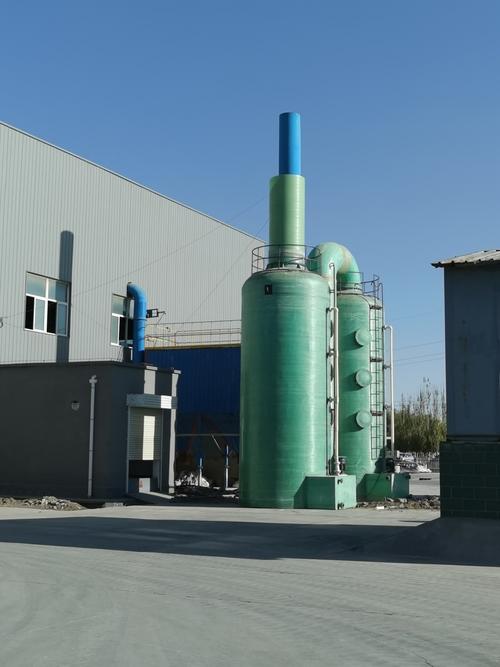
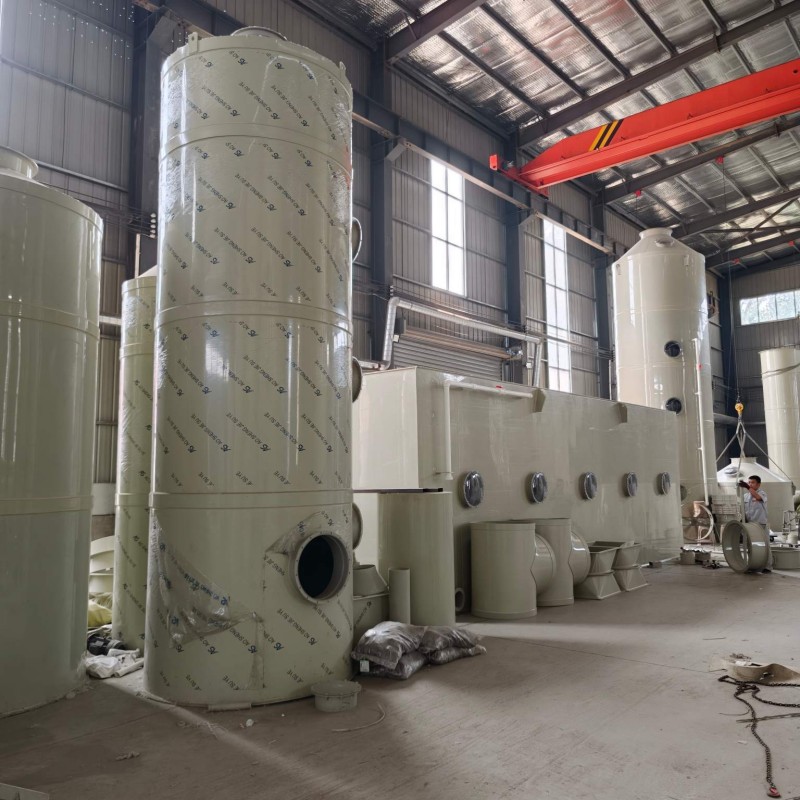
Protein hydrolysate production can release hot, humid and strongly odorous vapor during evaporation and concentration. For one recent inquiry, Shuokang developed a preliminary FRP wet scrubber solution for treating non-condensable gas and residual odor downstream of a condenser. The target airflow was approximately 5,000-6,000 m³/h.
Protein Hydrolysate Evaporator Odor Challenge
The customer's process starts with approximately 20,000 liters of liquid in a reactor and concentrates it to about 5,000 liters. Steam from the reactor enters a second tank, where water spraying cools and condenses part of the vapor. The remaining vapor was previously routed to a third tank and then discharged to the atmosphere.
After reviewing the process, the proposed arrangement was to place the odor-control scrubber after the condenser. This allows the condenser to remove most of the water vapor and reduce the gas temperature before the remaining odor reaches the scrubber.
Key Design Conditions
| Design item | Project information |
|---|---|
| Application | Protein hydrolysate evaporator odor treatment |
| Airflow after condenser | Approximately 5,000-6,000 m³/h |
| Gas condition | Humid, odorous and potentially corrosive |
| Target inlet temperature | Below 60°C after the condenser |
| Recommended scrubber material | FRP for corrosion resistance |
| Recommended configuration | Two-stage spray, packed section, chemical dosing and demister |
| Fan | FRP corrosion-resistant fan with variable-frequency control |
Why Water Spraying Alone May Not Be Enough
Clean water spraying can capture residual droplets and remove some water-soluble odor compounds. However, non-condensable gases may pass through a water-only system, causing unstable odor-control performance. The correct treatment method depends on the actual gas composition, odor concentration and required emission level.
For this application, a chemical dosing system was recommended so the recirculating liquid could be adjusted for better absorption and oxidation. Depending on gas analysis and local safety requirements, an alkaline solution or a suitable oxidizing solution may be considered. The chemical type and concentration must be confirmed during detailed process design. Hazardous chemicals such as liquid alkali or sodium hypochlorite should be sourced and handled locally in accordance with applicable regulations.
Recommended Two-Stage FRP Wet Scrubber Process
The preliminary treatment sequence was:
Evaporator → condenser → two-stage FRP wet scrubber → demister → FRP fan with VFD → exhaust stack
- Condenser: reduces water vapor loading and cools the gas before scrubbing.
- Two-stage spray system: improves gas-liquid contact and provides separate treatment zones.
- Packing layers: increase the contact area between the odor gas and scrubbing liquid.
- Chemical dosing: includes a dosing pump and can include pH monitoring or automatic control.
- Demister: captures entrained droplets before the cleaned gas leaves the tower.
- FRP fan: handles the wet, potentially corrosive gas after the scrubber.
- Variable-frequency drive: allows airflow adjustment during commissioning and operation.
Why FRP Was Selected for the Tower and Fan
Gas leaving a wet scrubber is saturated with moisture and may contain corrosive components. A carbon-steel fan can therefore have a shorter service life unless it is protected with a suitable corrosion-resistant lining or coating. FRP was recommended for both the scrubber body and fan because it offers good corrosion resistance for many wet chemical odor-control applications.
Continuous operation below 60°C is feasible when the selected FRP resin, packing, seals, pump and other components are compatible with the actual gas and scrubbing chemicals. Final material selection must be based on the confirmed operating temperature and chemical environment.
Pressure Drop and Fan Selection
Airflow alone is not enough to select the exhaust fan. The total system resistance must include the condenser, scrubber packing, spray zones, demister, duct length, duct diameter, elbows and stack. Because a two-stage scrubber and upstream condenser add resistance, the revised concept used a higher-pressure fan and variable-frequency control.
Before final fan selection, the supplier needs the condenser pressure drop, duct dimensions, number of elbows, stack height and required airflow at the actual operating condition. These values are used to calculate the required fan pressure and motor power.
Information Required for a Final Scrubber Design
- Gas flow rate after the condenser
- Normal and maximum gas temperature
- Odor source and available gas-composition data
- Condenser pressure drop
- Duct diameter, total length and number of elbows
- Stack height and available installation space
- Required odor-removal or emission target
- Available power supply and preferred control method
Frequently Asked Questions
Is one wet scrubber stage enough for protein hydrolysate odor?
A single stage may reduce part of the odor, but a two-stage system provides more contact time and greater process flexibility when chemical dosing is required. Final selection depends on odor composition, concentration and the discharge requirement.
Can the system operate continuously below 60°C?
Yes, provided that the FRP resin and all internal components are selected for the confirmed temperature and chemical conditions. Short-term temperature peaks must also be considered.
Why use an FRP fan instead of a carbon-steel fan?
The fan handles moisture-saturated gas downstream of the scrubber. FRP provides better corrosion resistance than unprotected carbon steel in many wet and chemically corrosive environments.
Is activated carbon always required after the scrubber?
No. A properly designed chemical wet scrubber can be used as the first treatment stage. Activated carbon may be added later as a polishing step if odor concentration remains high or the emission target is especially strict.
Customized Industrial Odor-Control Systems
Shuokang is a wet scrubber manufacturer supplying FRP and PP scrubber towers, packed sections, spray systems, demisters, chemical dosing equipment and corrosion-resistant fans. Each protein-processing odor system is sized according to the real airflow, temperature, gas composition, pressure drop and site layout.
For a customized proposal, provide your process flow, airflow after condensation, gas temperature, duct layout and odor-control target. Our engineers can prepare the scrubber dimensions, packing arrangement, pump and fan selection, pressure-drop calculation, drawing and quotation.
Related Equipment and Selection Guide
See the packed bed wet scrubber used for acid gas, fume and odor removal, then review pollutant, airflow, temperature and liquid-chemistry inputs in our wet scrubber selection guide.